
Bethany Dykema reread her selection letter until it sank in: she had been chosen to represent the United States at the 2026 FIH World Cup
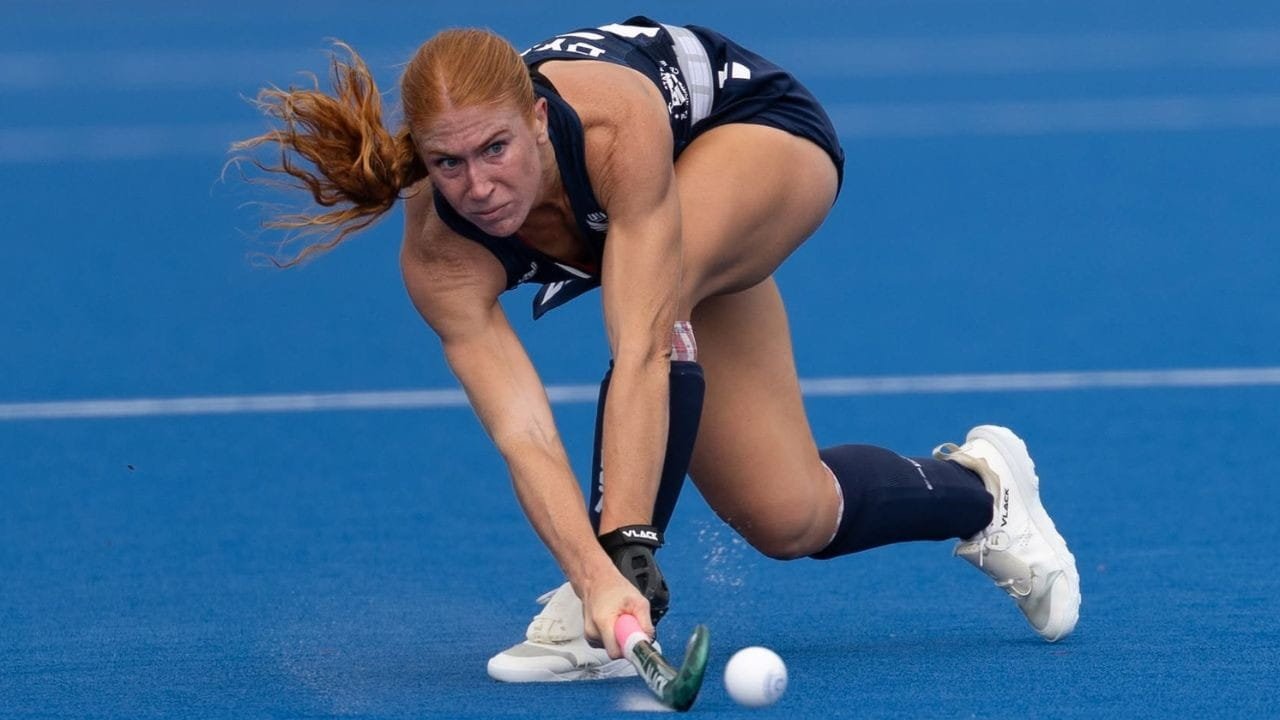
Bethany Dykema is pictured sweeping the ball in a game in the 2026 FIH Nations Cup. Photo: USA Field Hockey
Bethany Dykema was headed to Oman for the inaugural 2024 FIH Hockey5s World Cup with the H5s roster, when the rest of the selected U.S. Women’s National Team was preparing for a different kind of pressure in Ranchi, India.
The Ranchi qualifier was the Americans’ final chance to reach the 2024 Paris Olympics.
For Dykema, a recent Liberty University graduate and a new face in the national-team pool, the Olympic dream was distant — but not impossible.
Dykema had joined a training squad of roughly three dozen athletes. Head coach David Passmore was still shaping the program, too, after being hired in August 2022.
Their early conversations helped Dykema understand where the team was headed, how the centralized program worked and where she fit into Passmore’s vision. His communication, she said, was “super helpful.” That clarity mattered.
Before Passmore arrived, USA Field Hockey had undergone a major reset — from the player pool to the coaching staff — after years of stalled international results and a long wait to return to the Olympic stage.
The U.S. had not appeared on the Olympic field since Rio 2016 and had last competed internationally at the 2018 FIH World Cup.
One of the biggest moves was relocating USA Field Hockey’s high-performance program to Charlotte, North Carolina. For Dykema, those conversations with Passmore helped make the transition into a centralized environment feel less uncertain.
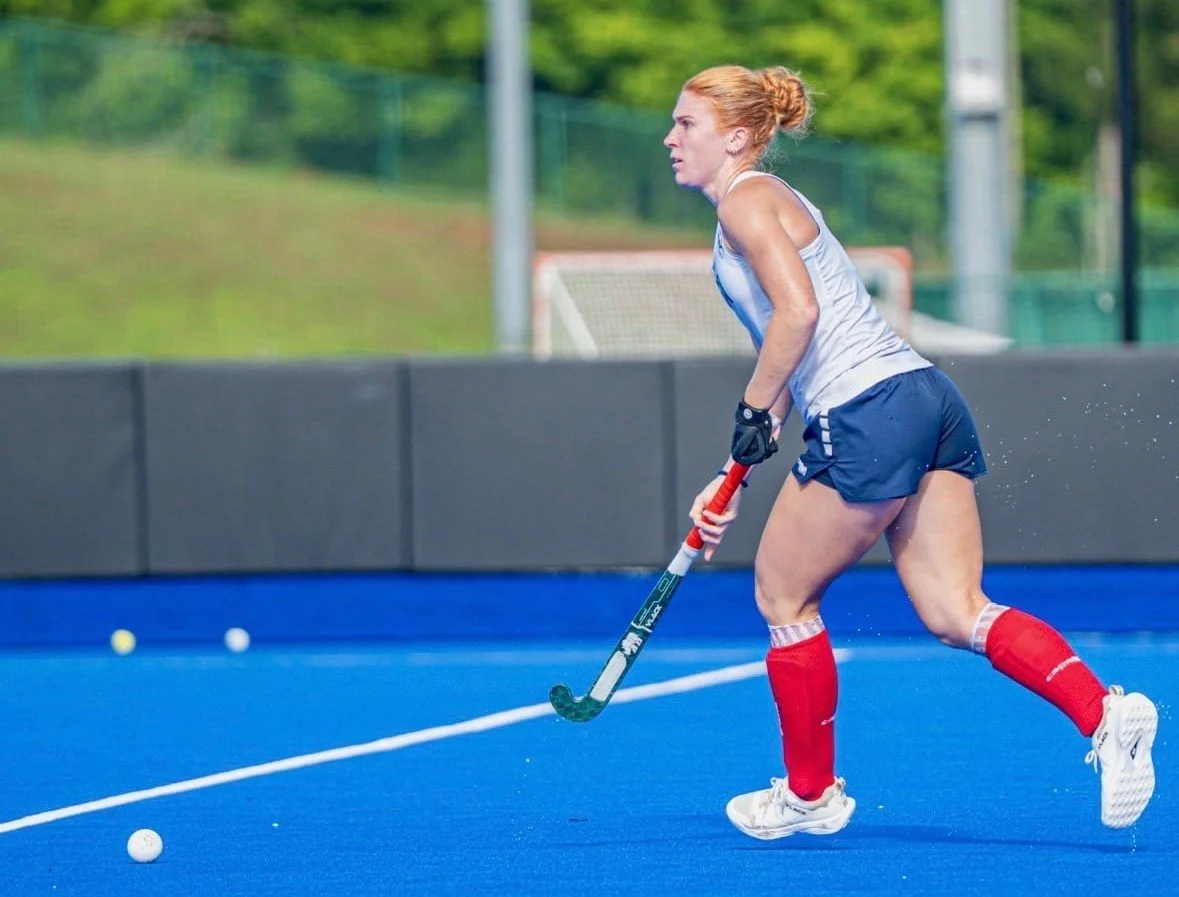
Practice at the US Performance Center in Charlotte, NC. Photo: Amaan Rashid
Dykema understood that making the Paris roster would have been a steep climb.
She had been with the group for less than a year, and her focus was still on growing from a college standout into an international player. Then, while she was in Oman competing at the Hockey5s World Cup, she tore her ACL in January 2024 just as the U.S. qualified for the Olympics.
The timing shifted her mindset immediately.
“I think my focus was more so, ‘how do I bounce back post long-term injury as a rookie,’ versus, ‘I can’t believe I won’t be able to compete for a spot in Paris,’” Dykema said.
When she returned from Oman, Dykema spent a few weeks at home in Newport News, Virginia before having surgery in Charlotte. The injury was limited to an ACL tear, with no additional structural damage to the knee, and she began physical therapy two days after surgery.
The first stretch of rehab was demanding and repetitive. Dykema saw Charlotte physical therapist Greg Ott every day for the first few weeks, with early sessions focused on reducing swelling and restoring range of motion.
She spent long hours on a slide board, connected to an electrical-stimulation unit, and using ice compression as she worked through the earliest stages of recovery.
“It was such a humbling experience to go from being a healthy active athlete to having to relearn how to walk and move,” Dykema said.
After about three months of daily physical therapy, she began combining that work with the USA Field Hockey staff at the United States Performance Center. Months four through seven centered on rebuilding strength and stamina through biking, running, light plyometrics and weight training, along with continued work on hip and knee stability.
By months seven through 10, her rehab became more sport-specific, with change-of-direction work, plyometrics and continued strength development. But the progress was not a straight line.
“The biggest thing I learned about ACL rehab is that it is not linear, and your recovery will never look identical to another person’s,” Dykema said.
Around the nine-to-10-month mark, Dykema began feeling unusual pain during certain movements.
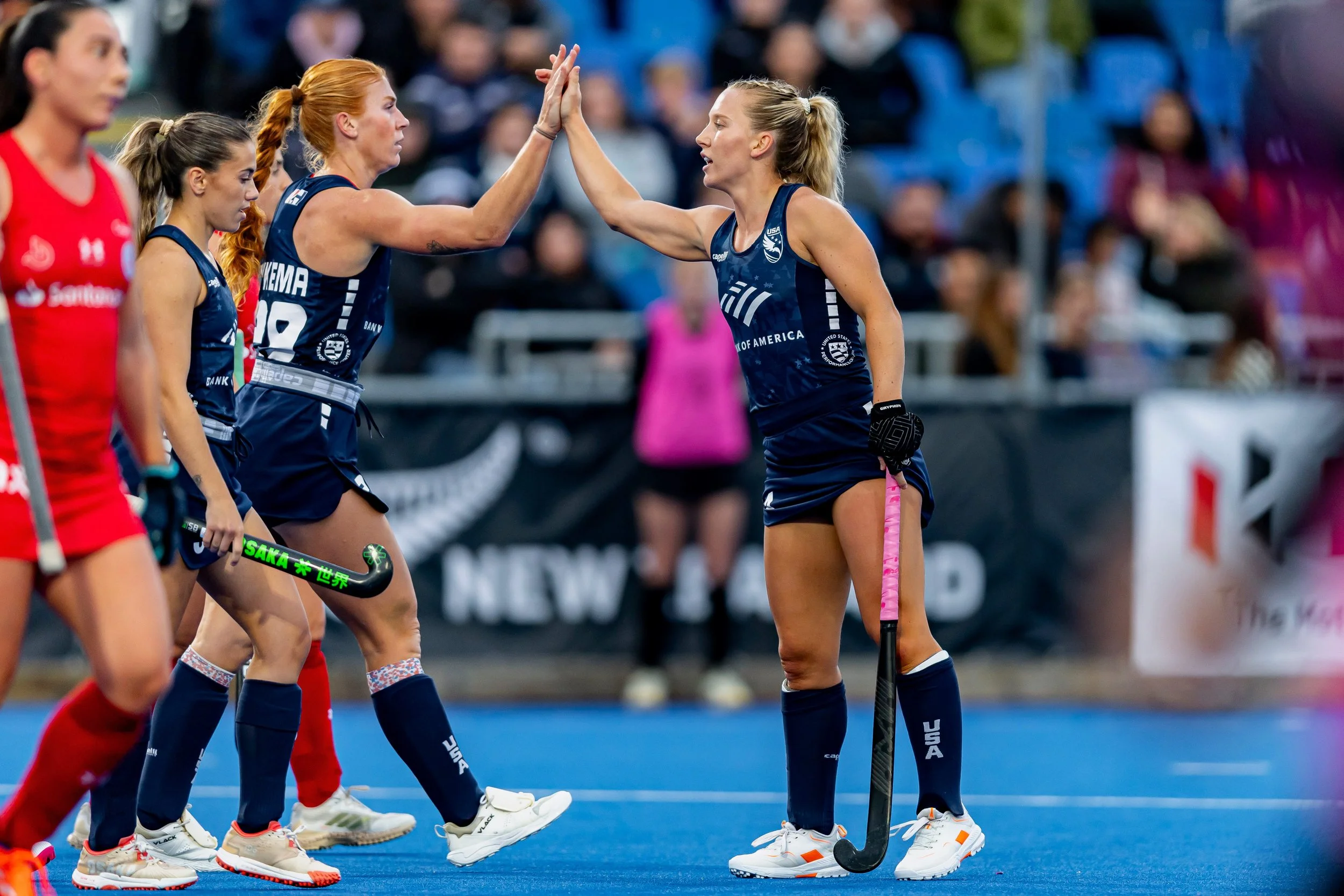
Dykema is pictured with teammate Phia Gladieux. Photo: World Sport Pics
Another MRI revealed scar tissue — a cyclops lesion — near the reconstruction site. Her medical team gave her two options: try an injection for a quicker fix or have surgery to remove the scarring, a procedure expected to set her back a few more weeks.
During surgery, doctors also found significant cartilage damage in her femur and performed a microfracture procedure to stimulate new cartilage growth. The additional procedure extended her recovery by about three-and-a-half months and forced her to slow down again, but Dykema said it was the right call for the long-term health of her knee and career.
The physical work was only part of the challenge. Dykema said the mental and emotional side of ACL recovery was often harder to manage because progress could feel slow, uncertain and, at times, invisible.
For a player used to pushing herself every day, accepting that recovery would not always show immediate results was difficult. So was the isolation. Dykema had joined the national-team environment in December and was injured in January, leaving her around the group but not fully in it.
Even being at practice without practicing was hard. Dykema described herself as a “connections player,” someone who feels belonging through doing difficult things with teammates. Months spent rehabbing and watching from the outside made her feel, at times, as if she had not fully become part of the team.
The injury also changed the way she thinks about performance. Dykema studied exercise science in college and earned a master’s degree in human performance, but the rehab process gave her a more personal understanding of what an athlete’s body can absorb — and what it needs to recover.
She became more intentional about nutrition, activation, cooldowns, sleep and recovery work. Even in drills or lifts, she said she now thinks more deliberately about moving efficiently and staying strong. She credited the strength and conditioning staff at the United States Performance Center for helping her return “even stronger and faster than before my injury.”
Looking back, Dykema said the setback strengthened her love for the game and expanded her gratitude for the ordinary parts of playing — gearing up, joining teammates and getting another chance to compete.
“Knowing it can end so quickly has made me cherish it even more,” she said.
Her faith also became a steadying force throughout recovery. Dykema often returned to Romans 8:28, a verse she said anchored her during the hardest moments and helped her trust that adversity could still produce growth.
When the World Cup selection letter arrived, Dykema read it more than once to make sure she had understood it correctly. After experiencing the national-team process from nearly every angle — injured, not selected and reserve — making the roster carried extra weight.
She felt excitement, happiness and pride, then quickly shared the news with her family.
Their response made the moment even more emotional because they had seen how steep the climb had been.
“To be selected to represent my country at the biggest tournament outside of the Olympics is an unreal feeling and one I will never forget or take for granted,” Dykema said.
Her parents, Mike and Sarah, were beyond proud of their daughter’s fight.
“We couldn’t be prouder of Bethany for earning her place at the World Cup,” her mom said. “Her hard work, dedication, and determination have brought her to this incredible moment. Watching her represent USA on the world stage is a dream come true, and we’ll be cheering her on every step of the way.”
Now she is eager for a new kind of stage: hockey in Europe, in front of crowds that know the sport and embrace its pace. Dykema has never played in Europe, but she grew up hearing about the atmosphere and the way the game is celebrated there.
She is just as excited about what the U.S. can show. After months of building, training and growing together, Dykema believes the team has a chance to make a statement on the world stage.
The opportunity also comes at a pivotal time for field hockey in the United States. With the sport gaining visibility, the LA28 Olympics approaching and the U.S. women already qualified as host nation, Dykema sees this World Cup as more than a tournament.
USA Field Hockey enter 2026 FIH World Cup with greater roster depth not seen in recent cycles
She believes visibility and accessibility will be critical to growing the game. Broadcast opportunities, including World Cup exposure on CBS Sports, can introduce more people to international field hockey. Social media, she said, can bring younger players closer to the daily life of elite athletes in a way she did not experience growing up.
Dykema hopes that access helps the next generation see a bigger path for themselves.
“I want the younger generation to be able to watch us and be inspired to dream big,” she said. “This World Cup is a huge opportunity for us to grow the game, and I am excited to be a part of it.”
Thank you for reading Female Athlete News. Reach us at femaleathletenews@gmail.com with a tip or story idea.
