
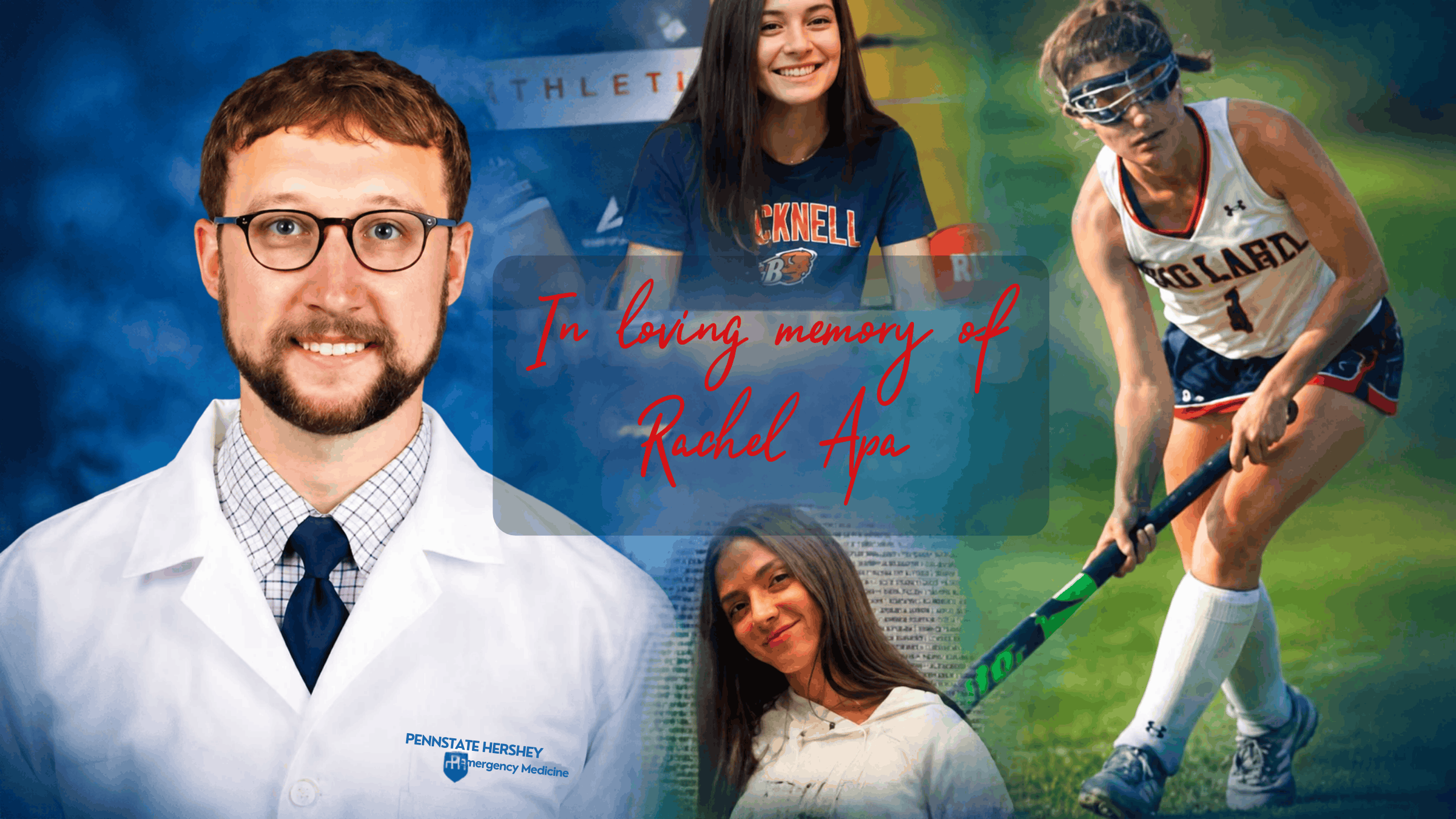
Dr. Michael DiPietro of Penn State Health Emergency Medicine explains rhabdo.
An intense workout could leave athletes tired and sore.
But severe, unexpected pain or weakness could signal rhabdomyolysis, a condition in which damaged muscles release substances into the blood that could harm the kidneys and affect the heart’s rhythm.
Rachel Apa, a former Division I field hockey player at Bucknell University, collapsed near mile 24 of the New York City Marathon on Nov. 1 and died later that day at Mount Sinai Hospital.
The Lewisberry, Pennsylvania, runner was competing in her first marathon and raising money for Parkinson’s disease research in honor of her grandfather, according to her fundraising page.
Her father, Steve Apa, told NBC News that she felt strong early in the race but sent messages describing pain around miles 18 and 20. Bystanders and race medical personnel performed CPR after she collapsed, and a defibrillator was used, according to news reports.
Her father told reporters that doctors linked her death to rhabdomyolysis. But the city’s medical examiner was still investigating as of Nov. 5, according to TIME, and the cause of her collapse and death had not been officially determined.
Strenuous exercise could trigger the condition, often called rhabdo, according to the Centers for Disease Control and Prevention. But ordinary workout soreness does not mean someone has it.
Even well-conditioned athletes could develop rhabdo after an unusually intense workout, Dr. Michael DiPietro of Penn State Health Emergency Medicine told Female Athlete News. He urged athletes to pay attention when pain or weakness feels different from their usual response to exercise.
More than ordinary soreness
Warning signs include pain much worse than expected, weakness, stiffness and tenderness, DiPietro said. Muscles may swell or hurt to touch, and even taking a step could be difficult.
The CDC also lists tea- or cola-colored urine and difficulty completing tasks or workouts that were previously manageable. Symptoms could appear hours or days after muscle injury, and not everyone has all the warning signs.
But, keep in mind, the severe muscle pain, “it’s happening in real time,” and not the next day, DiPietro said.
“I’ve never gotten to that point,” he said. “After a hard football practice, I probably would have said I had mild rhabdo…Working out breaks down the muscles, then they rebuild bigger.”
Because symptoms could resemble dehydration or heat-related illness, doctors use blood tests to diagnose rhabdo and monitor recovery. One test measures creatine kinase, a substance that rises in the blood when muscles are damaged, according to the CDC.
Anyone with symptoms should stop activity and seek immediate medical care, the CDC advises. Rest and water do not replace a medical evaluation.
Why muscle breakdown could become dangerous
Damaged muscles release myoglobin, a protein that could harm the kidneys as they filter the blood. They also release potassium. Too much potassium could disrupt the electrical signals that control the heartbeat, DiPietro said.
Cardiac arrest is a rare complication, he said. Doctors assess muscle damage, kidney function and levels of substances such as potassium to determine how serious a case is.
A “massive muscle breakdown of too much potassium,” only an injection of calcium would have to happen.
With that much potassium hitting a heart all at once, “you’re heart gets flooded” and an individual wouldn’t be able to “handle it,” DiPietro said.
His explanation concerns rhabdo in general, not a determination of what happened to Apa.
Treatment depends on severity. Some mild cases could be managed outside the hospital after evaluation, DiPietro said. Others require hospital care and fluids through an IV.
Severe cases may need treatment to correct potassium and other blood levels, or dialysis to filter the blood if the kidneys fail, according to MedlinePlus. Early care reduces the risk of lasting damage.
Who is at risk?
Beyond strenuous exercise, causes include crush injuries, extreme body temperatures, certain infections, seizures and some medications, according to MedlinePlus. Severe dehydration could also contribute.
DiPietro cited demanding military training as one example of exercise that could exceed someone’s conditioning.
Some inherited muscle diseases also increase the risk, as could cholesterol-lowering drugs called statins, according to MedlinePlus. People with medication concerns should consult a clinician rather than stop a prescription on their own.
Build training gradually – and listen to warning signs
“Hydration is key,” DiPietro said. But staying hydrated cannot make an excessive workout safe or guarantee protection against severe muscle breakdown.
Athletes should build intensity gradually, whether preparing for a marathon or the start of their season, he said. Coaches should not assume everyone is ready for a demanding first session just because conditioning was expected.
“Ease into training programs,” DiPietro said.
The first day of training should not be its hardest, he said.
Thank you for reading Female Athlete News. Reach us at femaleathletenews@gmail.com with a tip or story idea. Follow us on our social media pages for the latest news.
